
Bahadur Research Group, run by Vaibhav Bahadur, a professor in Mechanical Engineering and faculty affiliate of TMI, collaborated with the Bureau of Economic Geology to produce a whitepaper analyzing water requirements for data centers in Texas. The paper looked at evolving demands of water use in data center infrastructure in Texas, as well as possible solutions to meeting future needs.
Data centers, especially those running Artificial Intelligence (AI) and cloud infrastructure, produce extreme amounts of heat as they run the hardware non-stop. As more and more hardware is packed into smaller components and closer together, the heat produced requires sophisticated cooling mechanisms that rely heavily on water. One of their examples makes this clear: the total power going to a single data center rack (roughly the size of a large bookshelf), by 2028, will be the equivalent to the power draw of 1,000 U.S. households.
The white paper argues that "water is no longer a secondary input. It is a central engineering, environmental, and policy challenge that will shape the future of sustainable digital infrastructure." To address these concerns, the paper proposes a system-level approach that models "interactions across energy, water, land, and infrastructure systems" to help "planners to anticipate and mitigate unintended cross-sector consequences of large-load development."
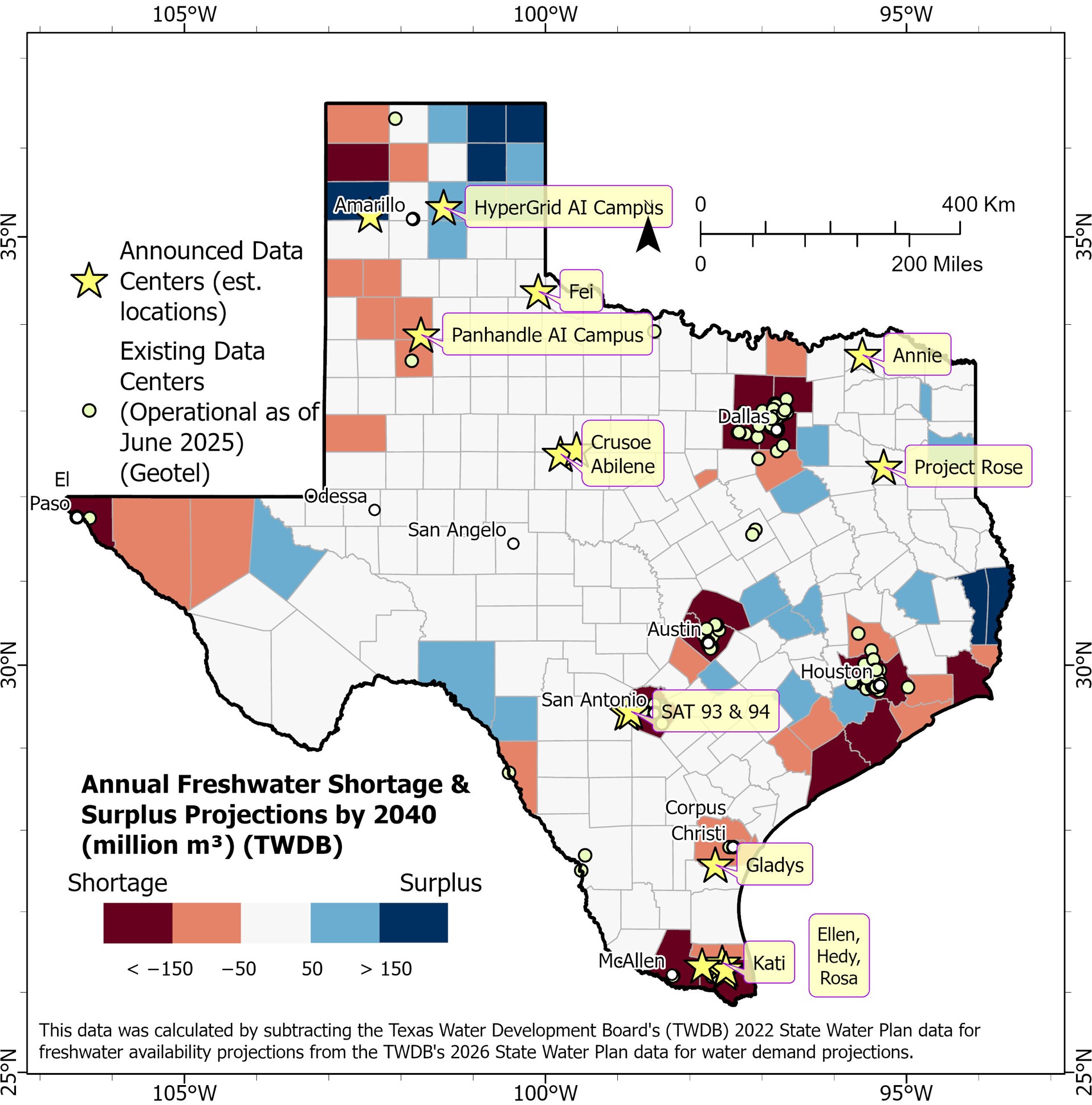
To read more, see "Water Use Requirements for Data Centers in Texas: A White Paper on the Evolving Demands of Water Use in Data Center Infrastructure in Texas" or visit the COMPASS website.
