
By combining advanced surface analysis techniques with computer simulations, the published research provided a deeper understanding of the chemical and physicial processes behind the formation of carbon-based films and their response to friction.
The team studied how thin carbon-based films form on platinum-gold (Pt–Au) surfaces when these materials experience friction. These films are important because they affect how well tiny electrical contacts work, which is critical for devices at very small scales. While previous studies looked at how the metal composition and sliding conditions influence film formation, little was known about how the surrounding gases and their pressure affect the process.
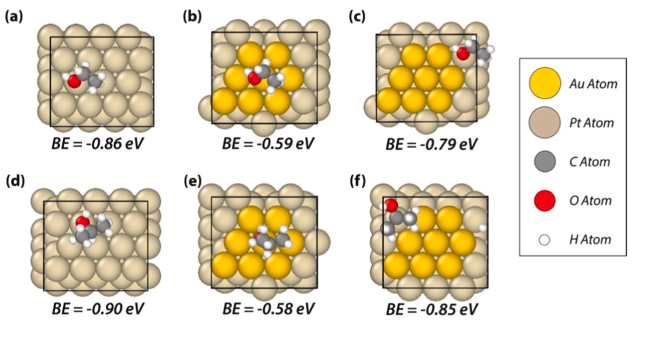
To explore this, scientists tested Pt–Au alloys in environments with different alcohol vapors (like ethanol and isopropanol) and pressures. They used advanced tools to analyze the films and computer simulations to understand how molecules stick to the surface and change its properties. The findings show that the type of gas and its pressure can significantly influence the film’s structure and how slippery the surface becomes. This knowledge could help design better coatings and improve the reliability of tiny electrical components.
This work will be published in Volume 247 of Carbon. The authors include Mechanical Engineering graduate student Camille E. Edwards and Materials Science & Engineering graduate student Nicolas Molina, Dr. Filippo Mangolini, as well as collaborators Tomas F. Babuska, N. Scott Bobbitt, and Michael Chandross from Sandia National Laboratories, as well as John F. Curry, a Senior Research Fellow with both the Mangolini Research Group and Sandia National Laboratories.
