
A new article in Advanced Energy Materials offers both a model that can help predict how much energy a battery may release when it overheats and an example of collaborate work done at the Texas Materials Institute. Led by Ayrton Yanyachi, a graduate student in the Walker Department of Mechanical Engineering, other contributors include Materials Science & Engineering students Siddhartha Nanda and Wenlong Li, TMI staff scientist Steve Swinnea, UT faculty Yijin Liu, Hadi Khani, and Ofodike Ezekoye, and Donal Finegan from the National Laboratory of the Rockies. Together, the work offers a clearer understanding of why batteries become hazardous under extreme conditions and offers a practical framework for comparing the safety and thermal stability of current and future battery technologies.
The study examined what happens inside lithium-ion batteries when they overheat, focusing on the materials commonly used in electric vehicle batteries: NMC811 cathodes and graphite anodes. The researchers developed a step-by-step approach to study how individual battery components break down, release heat, and produce gases during thermal failure.
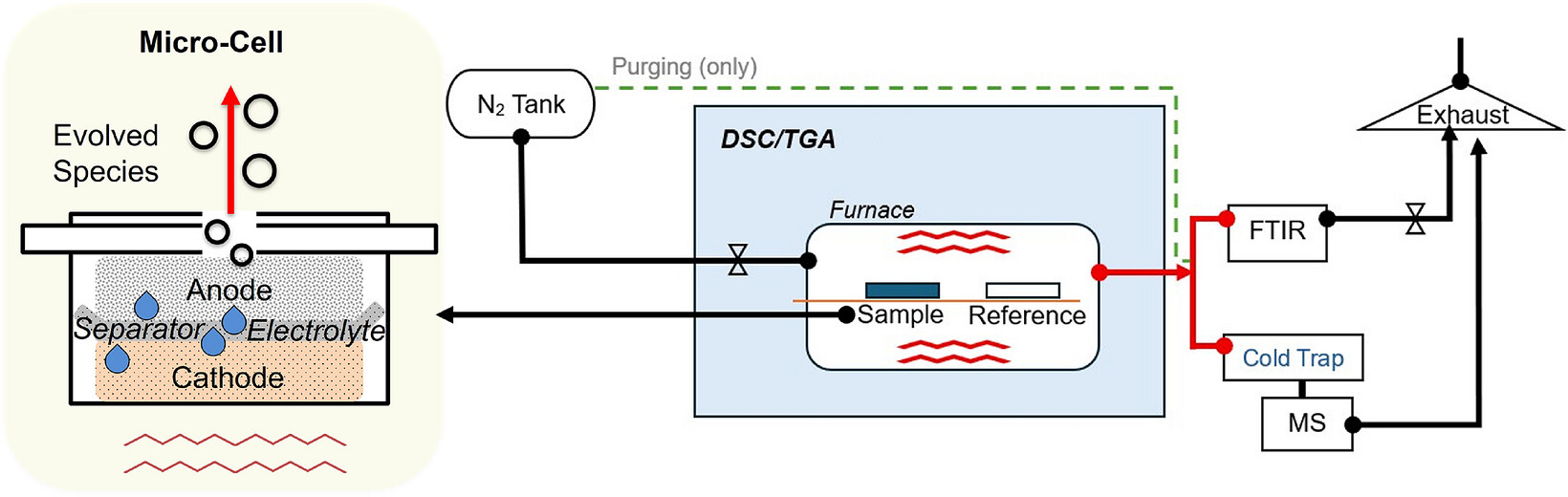
The study found that when the battery's positive and negative electrode materials interact directly, a reaction between oxygen released from the cathode and lithium from the anode generates a large amount of heat. However, when a separator is present, as it is in a real battery, it slows the movement of oxygen and changes how reactions occur, reducing the total heat released by nearly half.
By tracking heat generation, gas production, and structural changes in the materials, the team identified specific temperature ranges where important decomposition reactions occur. They used this information to build a model that predicts how much energy a battery may release during overheating, and the model closely matched results from full battery tests. This work offers a way to study thermal phase transformations in a laboratory instead of large, specialized facilites like synchrotrons.
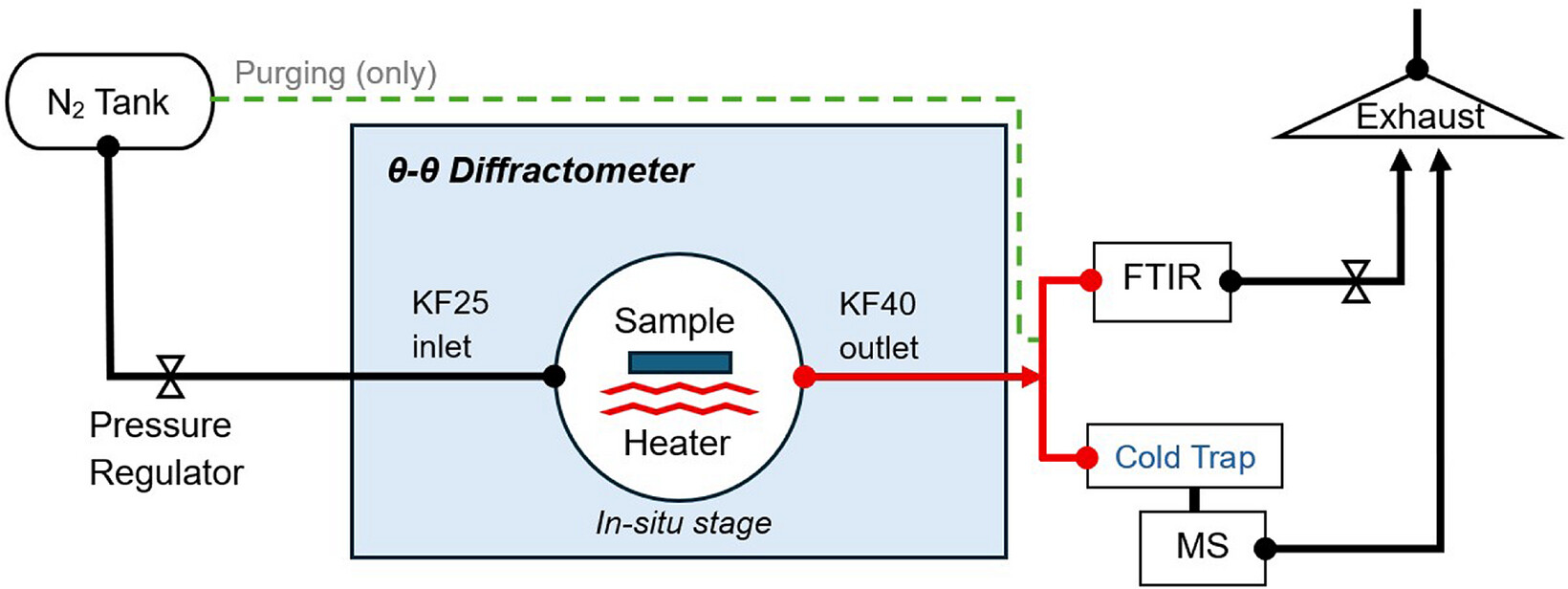
Read more of their study, "Linking DSC/TGA to Cell Levels: Energetics, Evolved Gases, and Thermal Safety of NMC811-Graphite Micro-Cell," at Advanced Energy Materials.
